Pulsing body jets on a pumped supply are often down to a sticking non-return valve at the water inlets rather than the jets themselves … check it before replacing anything, and never remove it, since it's there to stop water flowing backward. Weak flow on a single jet, rather than pulsing across all of them, points more to a partly blocked nozzle.
Applies to: shower cabins
Compatible with many shower cabin brands including



Quick diagnosis
If your shower cabin is showing these symptoms:
- One or more body jets surge on and off rather than running steadily
- The pulsing starts as soon as you turn the jets on
- Only a single jet pulses or runs weak while the others are fine
- The flow feels stronger, then weaker, in a repeating pattern
Likely causes, most likely first
- A sticking non-return valve on a pumped supply. NRVs sit just inside the water inlets to stop backflow; a valve that’s sticking rather than sealing cleanly can cause pulsing on a pumped feed and should be checked and replaced, not removed.
- Air in the pipework on a newly commissioned pump. If the pump hasn’t been fully bled and commissioned yet, trapped air can make the jets pulse in the same way.
- A partly blocked jet nozzle. Limescale build-up inside a single body jet restricts flow unevenly, so one jet pulses or runs weak while the others are fine.
- A blocked filter washer at the water inlet. Debris caught in the filter washer behind the shower restricts flow and can produce the same uneven, pulsing pattern.
Likely cause
Pulsing body jets on a shower cabin is usually a plumbing symptom rather than an electrical one. On a pumped supply, a non-return valve that's sticking rather than sealing cleanly is a common cause, and it should be checked and replaced rather than pulled out … NRVs are there to stop water flowing backward. Where a pump hasn't been fully commissioned, trapped air can cause the same pulsing pattern. Where only one jet is affected rather than the whole set, a partly blocked nozzle or filter washer is the more likely explanation.
Check this first
- Check whether the pulsing happens on every jet or only one or two … that separates a supply problem from a single blocked nozzle
- Check the water pressure feeding the shower against your manual’s minimum
- With the water isolated, check the braided hose connections at the rear for a non-return valve fitted just inside the inlet, and whether it opens and seals cleanly
How to identify your part
Pull the braided hose off the back of the valve and look inside the inlet fitting for a small white plastic non-return valve held in place by a silver C-clip. Check it opens and seals cleanly rather than sticking … if it’s stuck part-open or part-closed on a pumped supply, that’s a likely cause.
Parts that fix this problem
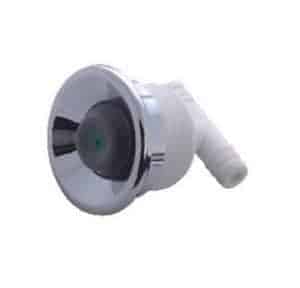
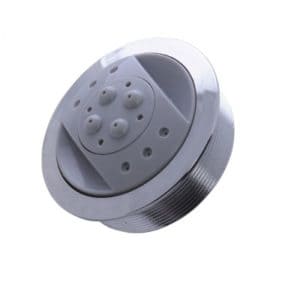
How to fix it
- Isolate the water supply before disconnecting anything
- Remove the braided hoses from the back of the valve at the rear of the cabin
- Look inside each inlet for a white plastic non-return valve held by a silver C-clip
- Check the valve opens and closes freely rather than sticking; replace it if it’s stuck rather than removing it
- On a pump-fed supply that hasn’t long been commissioned, bleed the pump fully to clear any trapped air before blaming the valves
- Reconnect the hoses and restore the water supply, then test the jets again
- If pulsing continues on one jet only, that nozzle is likely partly blocked with limescale rather than the valve being the cause
- Soak an affected nozzle in a descaler or white vinegar solution to clear limescale if flow is uneven jet to jet
When to call a professional
This is a water-pressure and plumbing fix, not an electrical one. If pulsing continues after checking the non-return valves and the water pressure, get a plumber to check the supply and valves rather than keep adjusting things yourself.