How long a steam shower takes to start producing steam varies by unit and room temperature, so slow heating on its own isn't necessarily a fault. It's usually down to a cold room, an unsealed cabin, limescale, or a partially blocked inlet filter. Work through the checks below before assuming a part has failed.
Applies to: steam showers
If your steam shower is taking longer than expected to heat up, it’s usually not a fault with the unit itself. In most cases, slow heat-up times are caused by environmental conditions, setup issues, or limescale affecting performance rather than a failed component.
Steam showers don’t heat instantly — a typical heat-up time can be around 5–10 minutes depending on the room temperature and installation. If it’s taking significantly longer than this, or longer than it used to…. there’s usually a clear reason that can be identified and resolved.
Compatible with many shower cabin brands including



Quick diagnosis
If your steam shower is showing these symptoms:
- Steam takes noticeably longer than usual to start
- The bathroom or installation room is cold
- The cabin roof isn't fitted, or there are visible gaps around the doors
- Performance has slipped gradually rather than changed overnight
- Steam feels weak once it does arrive, not just slow to start
Likely causes, most likely first
- A cold installation room. The shower heats faster on warmer days or once the room has been heated.
- An unsealed cabin. The roof is off, loose, or the doors don’t close flush.
- Scale build-up on the heating element. Heat-up time has crept up gradually over weeks or months.
- A partially blocked inlet solenoid filter. Heat-up has slowed and you’re in a hard water area, even without heavy scale on the element itself.
Likely cause
Heat-up time mostly comes down to how much heat is lost before steam can build. A cold room means the generator has to warm the air and the glass as well as produce steam, and a cabin that isn't sealed loses that heat as fast as it's made. In hard water areas, scale on the heating element acts as an insulating layer, so it takes longer for the same power to bring the water up to temperature. A partially blocked inlet filter can add to the delay too, by slowing how quickly water reaches the generator in the first place. A gradual slide in performance over weeks points to scale or a restricted filter rather than a sudden change.
Check this first
- Look for gaps around the roof panel or door seals. Any of these let heat escape as fast as it’s made.
- Warm the room a little before use if it’s a cold bathroom or outbuilding.
- Give the extractor fan a rest for the first few minutes. Running it too early carries the warm air away before steam can build.
- Check the water supply valves to the generator are fully open, and the inlet filter isn’t restricted if you’re on hard water.
Which part fits your cabin
| Brand | Model / range | Part | Confidence |
|---|---|---|---|
| Vidalux | Essence 800, Essence 900, Essence 1000 | Water Inlet Solenoid Fitting for Steam Generator | Checked against Vidalux’s own product records |
| Vidalux | Essence 800, Essence 900, Essence 1000, Essence Classic 800, Essence Classic 900, SS80 Steam Shower, SS90 Steam Shower, SS1000 Steam Shower, SS1200 Left Steam Shower, SS1200 Rectangular Steam Shower, SS1200 Right Steam Shower | Steam Generator Hose 100cm | Checked against Vidalux’s own product records |
This is a floor, not the full range.
How to identify your part
If descaling doesn’t bring heat-up time back down, the heating element inside the generator casing is the part most likely to need replacing: 3kW (2.8), 85mm long, with a four-connection, 50x62mm fixing plate. Take a photo of your existing element before ordering so the fixing centres match. The inlet solenoid runs on 12V DC and connects the supply hose to the generator.
Parts that fix this problem
In most cases, slow heating is not caused by a failed part but by setup, maintenance, or environmental factors.
If limescale has significantly affected the heating element or internal components, replacement parts may be required to restore full performance.
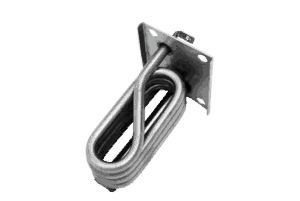

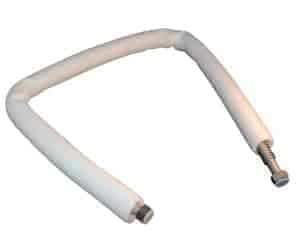
Not sure what’s causing your steam shower to heat slowly? Send us a photo of your setup or components and we’ll help point you in the right direction.
How to fix it
- Make sure the roof panel is seated properly and the door seals aren’t perished or gappy
- Let the room warm up a little if it’s cold, and allow extra time in winter
- Hold off using the extractor fan until the cabin’s properly warmed through
- Open the water supply valves to the generator fully and straighten any kinked hoses
- Turn the water off and clean the inlet solenoid filter if it’s restricted with grit or scale
- Descale the generator, the hose to the steam outlet and the heating element if you’re on hard water
- If heat-up time has crept up over months rather than changed suddenly, plan for the heating element to need replacing eventually
Also described as
- Steam shower slow to heat
- Steam shower taking too long to warm up
- Steam shower slow steam build up
- Steam cabin not heating quickly
Related guide
When to call a professional
Replacing the heating element itself is a job for a qualified electrician if it means disconnecting wiring inside the generator. Isolate the power at the fused spur first and don't work on the element live.