Weak pressure in a shower cabin is usually the incoming supply rather than a broken part. Either the household pressure genuinely isn't strong enough, or something is restricting flow before the water reaches the shower head altogether … a blocked filter washer or a stuck non-return valve in the hose connections, or a kinked hose itself. Check the free things first; a restricted cartridge is the only part that's commonly at fault.
Applies to: shower cabins and steam showers
If your shower cabin water pressure feels weak or the body jets are not performing properly, the issue is almost always related to the water supply or a restriction, rather than a fault with the cabin itself.
Steam showers and shower cabins require a minimum pressure of around 1.5 bar to operate correctly. If the pressure is below this, you may notice weak flow from the shower head, poor jet performance, or the steam generator struggling to fill.
In most cases, the problem comes down to blocked filters, low incoming pressure, or restricted pipework, all of which can usually be resolved with a few straightforward checks.
Compatible with many shower cabin brands including



Quick diagnosis
If your shower cabin is showing these symptoms:
- Shower head spray feels weak or thin
- Body jets have little or no pressure
- Pressure has suddenly dropped rather than always been weak
- Pressure is noticeably weaker on the hot or cold side than the other
- Water pulses or surges instead of running steadily
- Steam generator struggles to fill
Likely causes, most likely first
- Household water pressure genuinely too low. On Vidalux cabins this means at least 1 bar, ideally 1.5–2 bar; gravity-fed supplies from a loft tank often can’t reach that without a pump.
- Debris blocking a filter washer. The small filters inside the braided inlet hoses trap grit and scale from the household pipework; this is the usual reason one side, often the hot, runs noticeably weaker than the other.
- A water-saving restrictor washer fitted in the hose by mistake. These cut flow on purpose and are easy to miss if you haven’t gone looking for one.
- Hose kinked or trapped behind the cabin. Especially if the unit has been pushed back tight against the wall since it was installed.
- Non-return valve restricting or pulsing the flow. Have a plumber check it and replace it if it’s sticking, rather than taking it out yourself.
- Thermostatic cartridge restricted with limescale. In hard water areas the cartridge itself can narrow enough to cut flow, on top of any other cause above.
Likely cause
More often than not this is the supply or a blocked filter rather than a part that's failed, so it's worth working through the free checks before assuming you need a new cartridge.
Check this first
- Check your household water pressure and whether it’s gravity-fed; that’s the most common ceiling on performance
- Turn off the supply and check the filter washers where the braided hoses connect to the back of the valve
- If it’s weak on the hot side only, check that inlet’s filter washer specifically before assuming the whole supply is at fault
- Check whether a water-saving restrictor washer has been fitted in the hose by mistake
- Pull the cabin forward slightly and check the hoses aren’t kinked or trapped
- If the water pulses rather than just running weak, that points more towards a non-return valve than a blockage
Parts that fix this problem
In most cases, low pressure is caused by a blockage or supply issue rather than a failed part. Start by checking filters, hoses, and water pressure before replacing any components.

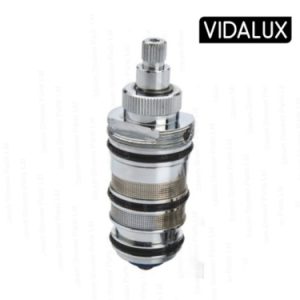
Not sure what’s causing your low pressure? Send us a photo of your setup and we’ll help you identify the issue and the right solution.
How to fix it
- Check your household water pressure and have a plumber fit a twin impeller pump if it’s gravity-fed and can’t reach around 1.5 bar
- Turn off the water and clean out the filter washers where the hoses connect to the valve, checking the hot side specifically if that’s the weak one
- Check the hose for a water-saving restrictor washer fitted by mistake and take it out if it’s not wanted
- Pull the cabin forward slightly and check the flexible hoses aren’t kinked or trapped
- If the water is pulsing rather than just weak, get a plumber to check the non-return valves and replace any that are stuck
- If flow is still poor in a hard water area, check the thermostatic cartridge for limescale and descale or replace it
Also described as
- Low shower pressure
- Weak shower flow
- Shower not powerful
- Poor water pressure in shower cabin
- Weak body jets
When to call a professional
If your household pressure is genuinely low across the whole property, that's a job for a plumber to fit a pump or look at the supply; everything else here (filters, hoses, non-return valves) is fine to check yourself.