Weak steam almost always comes down to restricted water reaching the generator, or heat escaping the cabin before steam can build. Check the water supply and cabin seal first. Limescale on the heating element is the next most common cause in hard water areas.
Applies to: steam showers
If your steam shower is producing weak steam, it doesn’t usually mean the unit is broken. In most cases, it’s caused by restricted water flow, limescale buildup, or heat escaping from the cabin rather than a major component failure.
Steam showers rely on a consistent water supply and efficient heating to build dense steam. If either of those is reduced, the steam will feel weak, thin, or slow to build.
Compatible with many shower cabin brands including



Quick diagnosis
If your steam shower is showing these symptoms:
- Steam feels thin or takes a long time to build
- Output has dropped off gradually rather than stopping suddenly
- The cabin isn't holding heat once steam starts
- No error or warning shows on the control panel
- Steam was fine after a recent clean but has faded again since
Likely causes, most likely first
- Restricted water flow to the generator. Steam builds slowly from a cold start, and improves once the valve is fully open.
- Low water pressure. The generator struggles to draw in water fast enough to convert to steam. Your household pressure is on the low side, or the shower is fed from a tank.
- Limescale on the heating element. Output has faded gradually over weeks or months rather than dropping suddenly, and you’re in a hard water area.
- Heat escaping the cabin. Steam looks fine near the outlet but never fills the enclosure, whether from a cold room or loose roof and door seals.
- A partly blocked steam outlet nozzle. You can hear the generator running but only a trickle of steam reaches the cabin.
Likely cause
In most cases the generator isn't getting enough water to convert into steam quickly enough, whether that's a part-closed valve, a kinked hose, a blocked inlet filter, or household pressure below the 1.5 bar the generator needs to fill properly. Limescale is the next most common factor: it builds up on the heating element and slows how fast the same power can heat the water. A cold room or a cabin that isn't fully sealed loses heat as fast as it's produced, which reads as weak steam even when the generator itself is working properly.
Check this first
- Open the isolation valve to the generator fully and check the supply hose isn’t kinked.
- Check your household water pressure if you know it, especially if the shower is fed from a tank.
- Confirm the roof is fitted and the doors close flush, with no obvious gaps.
- Warm the room a little if it’s a cold bathroom or outbuilding.
- Turn the extractor fan off while steam is building. It pulls steam straight out of the cabin.
- Look at the steam outlet nozzle for a visible chalky buildup.
Which part fits your cabin
| Brand | Model / range | Part | Confidence |
|---|---|---|---|
| Vidalux | Essence 800, Essence 900, Essence 1000 | Water Inlet Solenoid Fitting for Steam Generator | Checked against Vidalux’s own product records |
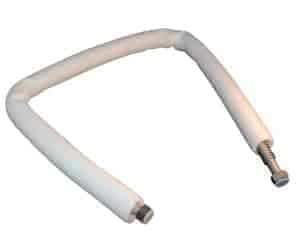
| Vidalux | Essence 800, Essence 900, Essence 1000, Essence Classic 800, Essence Classic 900, SS80 Steam Shower, SS90 Steam Shower, SS1000 Steam Shower, SS1200 Left Steam Shower, SS1200 Rectangular Steam Shower, SS1200 Right Steam Shower | Steam Generator Hose 100cm | Checked against Vidalux’s own product records |
Other Vidalux models may take these parts too.
How to identify your part
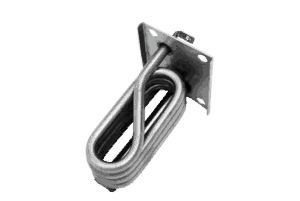
The heating element is rated 3kW (2.8) at 220V AC, 85mm long, with a 50x62mm fixing plate, fixing centres of 36mm horizontal by 50mm vertical, and four connections. The water inlet solenoid and drain solenoid both run on 12V DC. The steam hose to the outlet is 100cm long with 15mm fittings at both ends. Match a replacement by these measurements and connection type rather than by cabin model.
Parts that fix this problem
Weak steam is usually caused by flow or maintenance issues rather than failed parts.
If limescale has damaged internal components such as the heating element or solenoid valves, replacement parts may be required to restore full performance.

Not sure why your steam is weak or which part might be causing it? Send us a photo of your setup and we’ll help you identify the issue quickly.
How to fix it
- Open the water supply valve fully and straighten out any kinks in the inlet hose
- Have your water pressure checked if it’s on the low side or the shower is fed from a tank
- Turn the water off before removing and cleaning the inlet solenoid filter if you’re on hard water
- Isolate the power at the fused spur before descaling the generator and the hose running to the steam outlet with an approved descaler
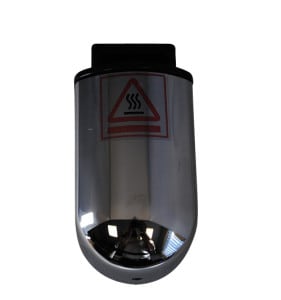
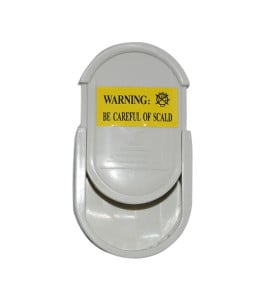
- Check the steam outlet nozzle for scale and clear it if blocked, or fit a replacement steam pod if it’s beyond cleaning
- Make sure the roof panel is properly fitted and warm the room a little if it’s a cold bathroom or outbuilding
- Leave the extractor fan off until the steam has built up
Also described as
- Steam shower weak steam
- Steam shower low steam output
- Steam shower not producing enough steam
- Steam cabin steam not strong
When to call a professional
If you've checked the supply, descaled the generator and the steam is still weak, the heating element may have failed rather than just scaled up. Replacing it means disconnecting wiring inside the generator casing, so isolate the power at the fused spur and get a qualified electrician to do the swap.