A new shower room can be one of the best upgrades you make to your home — whether you're swapping out an old, tired space or starting from scratch. But it’s also a pretty big investment, and one that takes careful planning before any work begins.
Costs can vary quite a bit depending on your bathroom layout, the type of shower unit you choose, and whether you’re hiring a pro or going the DIY route.
In this 2025 UK pricing guide, we’ll walk you through the average shower installation cost, from basic electric units to full wet rooms — so you’ll know exactly what to budget for, and where you can save.

Types of Showers and Their Installation Costs
Choosing the right shower unit depends on your home’s plumbing setup and your personal preferences. Here’s a quick guide to the most common types of showers in the UK, including average prices for 2025.
#1 Electric Shower
A budget-friendly choice that heats water on demand, making it ideal for homes with limited hot water.
Typical cost: £150–£300
Electric shower installation cost: £100–£150 for a plumber, plus £100–£150 for an electrician
#2 Mixer Shower
Connects directly to your hot and cold water supply for a strong flow. Best suited to homes with combi boilers or high-pressure systems.
Typical cost: £150–£300
Installation cost: £200–£300
#3 Power Shower
Features a built-in shower pump to boost water flow — great for low-pressure systems (but not suitable for combi boilers).
Typical cost: £200–£500
Installation cost: £250–£400
#4 Digital Shower
Modern and sleek, digital showers offer smart temperature control and wireless operation. Great for tech-lovers or luxury bathrooms.
Typical cost: £250–£1,000+
Installation cost: £300–£500 depending on complexity
Shower Trays, Enclosures, and Walk-In Options
When planning a new shower room, your choice of enclosure and tray can make a big difference — both visually and in terms of cost. Here’s what to know about these elements before booking the work.
Shower Trays
A shower tray forms the base of your shower, keeping water contained and draining efficiently. You’ll find trays made from materials like acrylic, stone resin, or ceramic — with stone resin being the most popular in 2025 for its balance of durability and style.
Typical cost: £250–£450 (depending on size and material)
Installation cost: Often included in the overall shower fitting, but separately can cost around £100–£150
Shower Enclosures
A new shower enclosure keeps water inside the tray area and gives structure to your space. You can choose from hinged doors, sliding doors, or walk-in glass panels — and the thickness of the glass (usually 6–8mm) will affect the price.
Typical cost: £350–£600 for a quality enclosure
Shower Enclosure Installation cost: £150–£250
Time to fit: Around 3 to 4 hours
Walk-In Showers
Walk-in showers are a sleek, modern choice — no shower doors, just a large open space and a simple screen or partition. They’re perfect for minimalists or anyone needing easier access.
Typical total cost (supply + installation): £2,100–£3,000
This includes a tray (or fully tiled floor), screen, waterproofing, and labour.
If you’re going for a fully open wet room look, don’t forget the full floor and wall tiling, proper drainage, and waterproofing — which can push all the costs higher but deliver a stunning, spa-style finish.
Want a step-by-step breakdown of installing a new shower tray yourself? Check out our [Fitting Shower Tray DIY Guide].

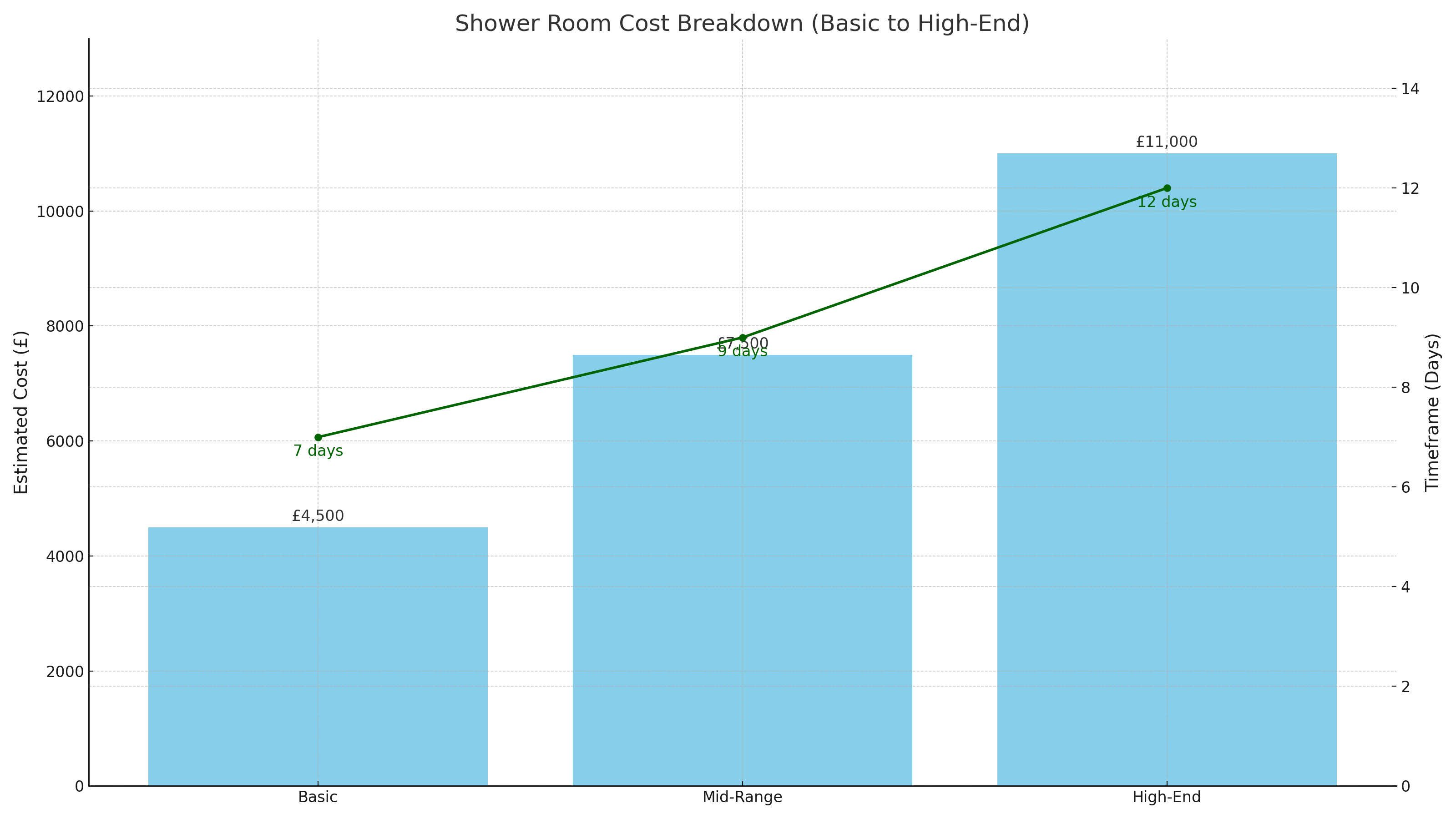
Shower Room Cost Breakdown (Basic to High-End)
The total cost of new shower room UK can vary quite a bit depending on your budget, the fittings you choose, and how much you’re changing the space. Here’s a helpful breakdown to give you a better idea of what to expect.
Basic Shower Room
This is what we’d consider a complete renovation — where everything gets stripped out and replaced from the ground up. That includes the safe disposal of your old bathroom, fresh plumbing, a new shower unit, tiling, flooring, and all the fittings. It’s a full reset and a great way to modernise a tired space without going overboard on the budget.
Includes: basic electric or mixer shower, acrylic tray, standard enclosure, vinyl flooring.
Estimated cost: £4,000–£5,000
Timeframe: 5–7 days
Mid-Range Shower Room
More flexibility in design and better-quality materials. Great if you’re upgrading your shower unit and want more visual appeal.
Includes: power or digital shower, stone resin tray, thicker glass enclosure, ceramic tiling, and extractor fan.
Estimated cost: £7,000–£8,000
Timeframe: 7–10 days
High-End or Bespoke Shower Room
A full transformation using premium or custom materials — ideal for luxury homes or unique layouts.
Includes: digital shower with smart controls, walk-in or wet room design, underfloor heating, natural stone tiles, and bespoke fixtures.
Estimated cost: £10,000+
Timeframe: 10–14 days+
You can save on costs by reusing plumbing positions or choosing mid-range tiles and fittings. On the other hand, changing your bathroom layout or opting for premium finishes will naturally push the price higher.
Also Read: Best Shower Wall Panels
Labour, Location & Installation Costs Explained
The cost of labour can easily make up 40–60% of your total shower room budget — especially if you’re hiring multiple trades. Here’s a closer look at what to expect in 2025 across the UK.
Typical Labour Costs by Trade
Depending on the job, you might need a plumber, electrician, tiler, or general builder. Below are typical hourly or job-based rates:
Trade | Typical Cost (per task or day) |
|---|---|
Plumber | £40–£80 per hour, or £150–£300 per day |
Electrician | £50–£100 per hour, or £200–£400 per day |
Tiler | £25–£40 per m², or £150–£250 per day |
Bathroom Fitter | £150–£250 per day (general tasks) |
Note: Complex tasks like installing a new electric shower or moving pipework may incur higher fees.
Location Matters
Labour costs vary depending on where you are in the UK:
- London & South East: Prices can be 10–20% higher than average due to demand and higher living costs.
- North of England, Midlands, Scotland: Typically more affordable, with day rates 10–15% lower than the national average.
Specialist Work
Some jobs may require dual-skilled trades (e.g. a plumber who can do minor electrical work), which can reduce callout costs. For example, a straight swap of an electric shower may only need one tradesperson, while a new installation will usually require both a certified electrician and a plumber.
Want a professional quote without the hassle? You can get matched with local bathroom installers from just £99 – Get your quote now

DIY vs Professional Shower Installation
One of the first big decisions you’ll face is whether to hire professionals or take on the shower room upgrade yourself. While going DIY might seem like the cheaper route, it’s not always the easiest — or the safest.
What You Can Do Yourself
- Painting and decorating
- Simple tiling (if you’ve got the tools and patience)
- Fitting accessories like mirrors, shelves, or towel bars
What’s Best Left to the Pros
- Plumbing: Fitting a new shower unit or changing pipework
- Electrical work: Especially for electric showers — this needs to be signed off by a certified electrician under Part P regulations
- Flooring: Getting a level finish and proper waterproofing can be tricky for DIYers
- Full room renovations: Coordinating trades, waste removal, and sourcing fixtures is a job in itself
Why Hiring Pros Can Be Worth It
Hiring a professional means everything’s handled for you, from the fixtures to the finish. You’ll get a clear quote that includes all the details, and you won’t need to chase up deliveries or coordinate different trades.
It also gives you peace of mind that everything is up to regulation, installed correctly, and it usually comes with a guarantee.
Looking for someone to handle the full job? You can get a shower room installation quote from just £99 — click here to find local fitters.
DIY vs Professional Shower Installation: Pros and Cons
DIY | Professional Installation |
|---|---|
✅ Lower upfront cost | ✅ All work handled for you |
✅ More control over timing | ✅ Regulated, guaranteed installation |
✅ Good for minor upgrades | ✅ Faster, more efficient |
❌ Can take much longer | ❌ Higher overall cost |
❌ Risk of costly mistakes | ❌ Less flexibility on schedule |
❌ Limited to your skill level | ❌ Need to trust and vet contractors |
Final Tip
If you’re just replacing an old shower unit with a similar one, a straight swap might only require one tradesperson. But for full shower installations — especially if you’re changing the layout or dealing with electrics — it’s best to leave it to the experts.
Still curious about what goes into installing an electric shower? Check out this detailed step-by-step electric shower installation guide to get a feel for what’s involved before you commit to DIY.
Hidden or Additional Costs to Budget For
Even with a well-planned shower room project, there are always a few extra costs that can sneak up on you. Here are some of the most common “surprise” expenses to keep in mind when budgeting:
1. Removing Your Old Bathroom
Ripping out old fixtures and disposing of them safely isn’t always included in your quote. Many fitters will charge extra for this unless it’s clearly stated.
- Cost range: £150–£600 depending on what’s removed
- Tip: Ask if waste disposal is included in your quote — or consider hiring a skip for around £150–£250.
2. Fixing Old Wiring
If your current electrics don’t meet building regulations, they’ll need updating — especially if you're installing a new electric shower.
- Cost range: £100–£300 for minor updates, more if rewiring is needed
3. Tiling & Surface Repairs
Installing a new shower often means retiling or patching up walls and floors. In some cases, old tiles must be removed first.
- Cost range: £400–£1,000+ depending on surface area
4. Fuse Box or Cabling Upgrades
If you’re adding a new electric shower for the first time, your electrician may need to run a dedicated cable to your consumer unit.
- Cost range: £150–£350
- Also factor in minor plastering or decorating work afterward.
5. Buying the Shower Unit & Accessories
Most installation quotes won’t include the actual shower unit, enclosure, screen, or extras like a shelf or grab rail — so make sure to budget for those separately.
Changing Your Bathroom Layout: What It Means for Your Budget
If you're thinking about moving your shower, sink, or toilet to a different location in the room, you're not just looking at a cosmetic upgrade — you’re dealing with plumbing and electrical changes, too. And that can add a noticeable chunk to your overall installation costs.
When You’re Changing the Layout…
- New pipework may need to be installed, extended, or rerouted
- You might need a new waste connection if you’re moving the toilet
- Flooring, tiling, and walls will likely need more repair work
- Electricians may need to rewire lighting or add new points
Typical Cost for Layout Changes
- Minor changes (e.g. adjusting pipework): £300–£700
- Major changes (e.g. moving shower/toilet across the room): £800–£1,500+ depending on complexity
- Extra time: Add 1–3 days to your total project
If you’re working with a small space, changing the layout could be the key to a better bathroom — but make sure it’s worth the cost. Always get advice from a qualified fitter or designer before committing.
Further Reading: Fitting Shower Tray DIY Guide

FAQ's
Q: Can I Install An Electric Shower Myself?
A: If you're doing a like-for-like replacement — swapping out an old electric shower for a new one — it may be possible to handle parts of the job yourself, especially if you're confident with plumbing and tiling.
However, any new electric shower installation that involves wiring should be done by a certified electrician to meet UK Building Regulations.
Q: Is A Wet Room More Expensive Than A Standard Shower Room?
A: Yes, in most cases. Wet rooms need full waterproofing (called tanking), professional drainage systems, and floor-to-ceiling tiling. It’s a high-end, modern option — but it comes with extra costs. A fully fitted wet room in 2025 can cost anywhere from £8,000 to £12,000 or more.
Q: What’s The Difference Between A Walk-In Shower And A Wet Room?
A: A walk-in shower typically includes a low-profile shower tray and one or more glass shower panels to contain water. A wet room, on the other hand, has no tray at all — the entire space is waterproofed, and the floor slopes gently toward a hidden drain. It offers a seamless, open-plan design that’s ideal for accessibility.
Q: Do I Need Both A Plumber And An Electrician To Install A Shower?
A: It depends on the type of shower. For water-fed models like mixer showers, a plumber alone is usually enough. But electric or digital showers almost always require both a plumber and a certified electrician — especially if it’s a brand new installation. Some fitters are dual-qualified, so it's worth asking.
Q: How Much Does A New Shower Unit Cost?
A: Costs vary depending on the type of unit you choose. Electric and mixer showers tend to start around £150, while digital and power showers can reach £1,000 or more. Here's a rough guide:
- Electric shower: £150–£300
- Mixer shower: £150–£300
- Power shower: £200–£500
- Digital shower: £250–£1,000+
Labour is additional, usually ranging from £200 to £500 depending on complexity.
To Conclude
We hope this guide has given you a clear idea of what to expect when planning and budgeting for your new shower room. From understanding the different types of shower units to knowing the hidden costs that can creep in, a little research now can save you time, money, and hassle later on.
Whether you’re going for a straight swap, a full renovation, or something in between, careful planning — and knowing when to call in the pros — will always pay off.
Have you recently renovated your shower room? Thinking about doing it yourself? Let us know what worked for you, what surprised you, or what you'd do differently. Drop your thoughts in the comments below — we’re always interested in real experiences and tips from our readers.