If you’ve been dealing with low water pressure and disappointing showers, installing a shower pump can make a big difference.
But before you go ahead or start troubleshooting issues, how much do you actually know about how they work — or what to do when things go wrong?

Whether your pump has stopped working, is making strange noises, or isn’t delivering the pressure it used to, don’t worry. Sometimes, the solution is as simple as checking the power, clearing a blockage, or giving the pump a quick reset.
This guide is here to walk you through everything you need to know about shower pump problems — from common faults and DIY fixes to long-term maintenance tips. We’ve packed in the most frequently asked questions, expert advice, and troubleshooting steps to help you get your shower working.
Understanding Shower Pumps
A shower pump is a device designed to boost water pressure by pushing water through your pipes more forcefully. It's especially useful in homes with low gravity-fed systems, where water flow from the shower feels weak or inconsistent.
Shower pumps work by using electric motors and impellers to draw water in from your hot and cold tanks, then pump it out at a higher pressure to your shower head. They're typically installed near the hot water cylinder and require proper pipework and ventilation to function efficiently.
Choosing the right type — positive head or negative head — depends on your home's plumbing layout and how water flows to the pump.
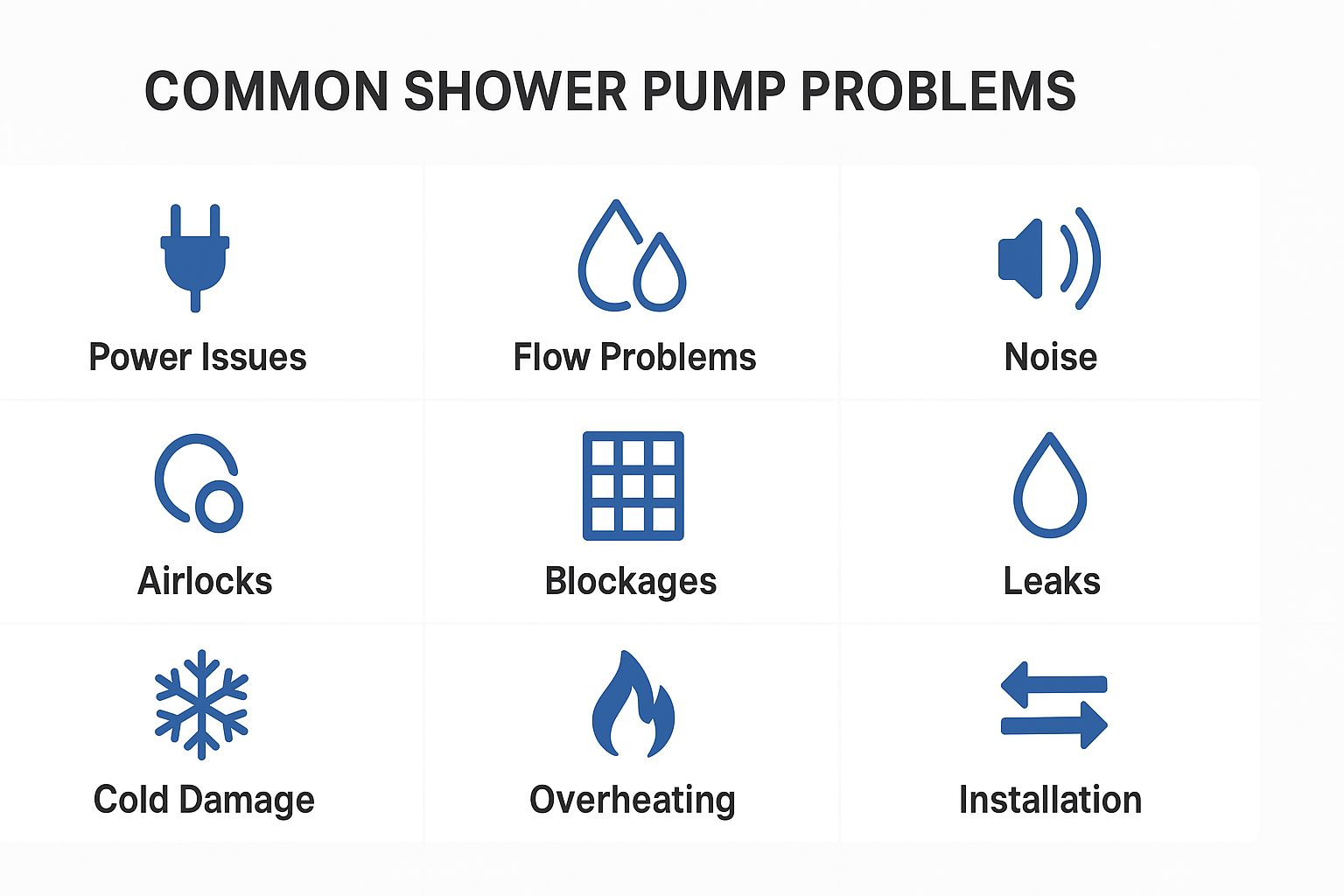
Common Shower Pump Problems
#1 Startup & Electrical Issues
When your shower pump won’t turn on, behaves unpredictably, or blows fuses, the issue is often electrical or installation-related. While some of these can be resolved with a quick check, others may require a qualified electrician or plumber to investigate further.
Shower Pump Not Working / Doesn’t Start
If your shower pump isn't starting at all, try these steps first:
- Check the power supply – Make sure the isolation switch is on and power is reaching the pump.
- Inspect the fuse – A blown fuse can easily stop the pump from starting. Replace it with the correct type specified by the manufacturer.
- Look for blockages – A significant blockage can prevent the pump from activating.
- Reset the pump – Turn off the power, wait a few minutes, and turn it back on. This sometimes resets internal components.
If none of the above works, it’s worth calling in a professional to inspect the wiring or installation.
Shower Pump Doesn’t Start Straight Away
If your shower pump delays when turning on, it could be:
- A faulty flow switch – These can wear out over time and are usually inexpensive to replace.
- Incorrect installation height – If there's not enough “head” (the distance between the water tank and the pump), it may struggle to activate. This is more common in positive head systems.
- Air in the system – Bleeding the pump may help restore proper function.
Shower Pump Comes on Randomly
If your pump turns itself on and off without warning, this could indicate a leak in the system. Many modern pumps include sensors that automatically trigger or shut down when pressure changes are detected.
Check for leaks around joints, pipes, or the shower head. If you can’t find the issue, a plumber can run a pressure test to identify the source of the problem.
Shower Pump Blowing Fuses
Frequent blown fuses are often caused by:
- Running too many electrical appliances at once
- An electrical short or internal fault in the pump
- Using the wrong type of fuse – Always match the fuse rating specified by the manufacturer.
Using a fuse that’s too strong can damage the pump. One that’s too weak won’t provide enough power for the pump to run properly. If in doubt, speak to an electrician.
Shower Pump Running Constantly or Won’t Turn Off
If your pump keeps running even after you've turned off the shower, it may be due to:
- A stuck flow switch or sensor – Disconnecting it temporarily can help confirm if it’s the issue.
- An electrical fault in the control box or transformer
- Improperly installed pipework – creating constant flow signals
In rare cases, poor earthing (especially with Venturi sensors) can confuse the system into running nonstop.
Shower Pump Broken (Completely Unresponsive)
If your pump is completely unresponsive and you’ve ruled out power, blockages, and airlocks, it’s time to call in a professional. Internal electrical failures or motor burnout usually require a replacement pump or significant repair.
#2 Performance & Water Flow Issues
If your shower pressure is weak, pulsing, or stops altogether, the issue often lies with water flow — whether it’s a blockage, airlock, or even an overly powerful pump. Below are the most common performance-related problems and what you can do about them.
Shower Pump on But No Water
If the pump is running but no water is coming through, it usually points to one of the following:
- A blockage in the pipes or filters
- An airlock in the system
- Empty or low water in the hot or cold tank
- Incorrect pipe configuration that prevents the pump from drawing water
Start by checking your water tanks and bleeding the pump (see the "Airlocks" section) to remove trapped air. If that doesn’t help, inspect the filters or shower head for blockages.
Shower Pump Pulsating / Pulsating Pump
A pulsing pump or surging effect usually indicates a disruption in water flow or pressure. This is often caused by:
- Limescale buildup
- Blocked filters
- A partially blocked or clogged shower head
- Air trapped in the pipework
Try flushing the shower head, cleaning the filters, and bleeding the system. If the problem persists, call a plumber to inspect for deeper plumbing issues.
Shower Pump Too Powerful
While it might feel great at first, a shower pump that's too powerful can actually cause more problems than you might expect. High flow rates can be tough on your plumbing and lead to a few common issues:
- Potential damage to pipework and fittings due to excessive water pressure
- Increased water usage, which can quickly lead to higher water bills
- Hot water running out too fast, leaving little to no supply for the rest of the household
If you're finding that the shower is a little too intense, one quick fix is to partially close the isolator valves on the outlet side of the pump. This will help reduce the pressure. Just be careful not to restrict the inlet side, as that can cause the pump to run dry or overheat.
Shower Pump Running Dry
Many shower pumps come with built-in protection to stop them from running dry, as this can quickly cause motor damage.
This often happens when:
- The water supply is interrupted
- Air has entered the system
- The tanks are empty or low
In most cases, bleeding the system or refilling the tanks can get things back to normal.
Weak Water Pressure / Inconsistent Flow
If your shower feels weaker than usual or the flow is inconsistent:
- Check the shower head for limescale
- Clean the pump filters
- Look for any kinks or bends in the pipework
- Make sure both hot and cold feed pipe supplies are feeding the pump correctly
Tips for Increasing Shower Pressure
If you're not quite getting the boost you expected from your pump, try these quick tips:
- Clean or replace the shower head
- Ensure the pump is installed close to the hot water cylinder
- Check all pipe connections are secure and free of leaks
- Consider upgrading to a more powerful pump if the system allows it (always consult a plumber first)
#3 Noise & Vibration Issues
Shower pumps are never completely silent, but excessive or unusual motor noise is usually a sign that something isn’t right. Whether it’s loud vibrating, buzzing, or grinding, this section covers the most common noise-related problems and how to fix them.
Noisy Shower Pump Problems
It’s normal for shower pumps to make some noise, but if the sound becomes loud or irritating, there are a few possible causes:
- Jammed impellers – Often due to limescale buildup or debris
- Stuck seals – Which can prevent parts from moving properly
- Electrical faults – May cause the motor to misfire or overwork
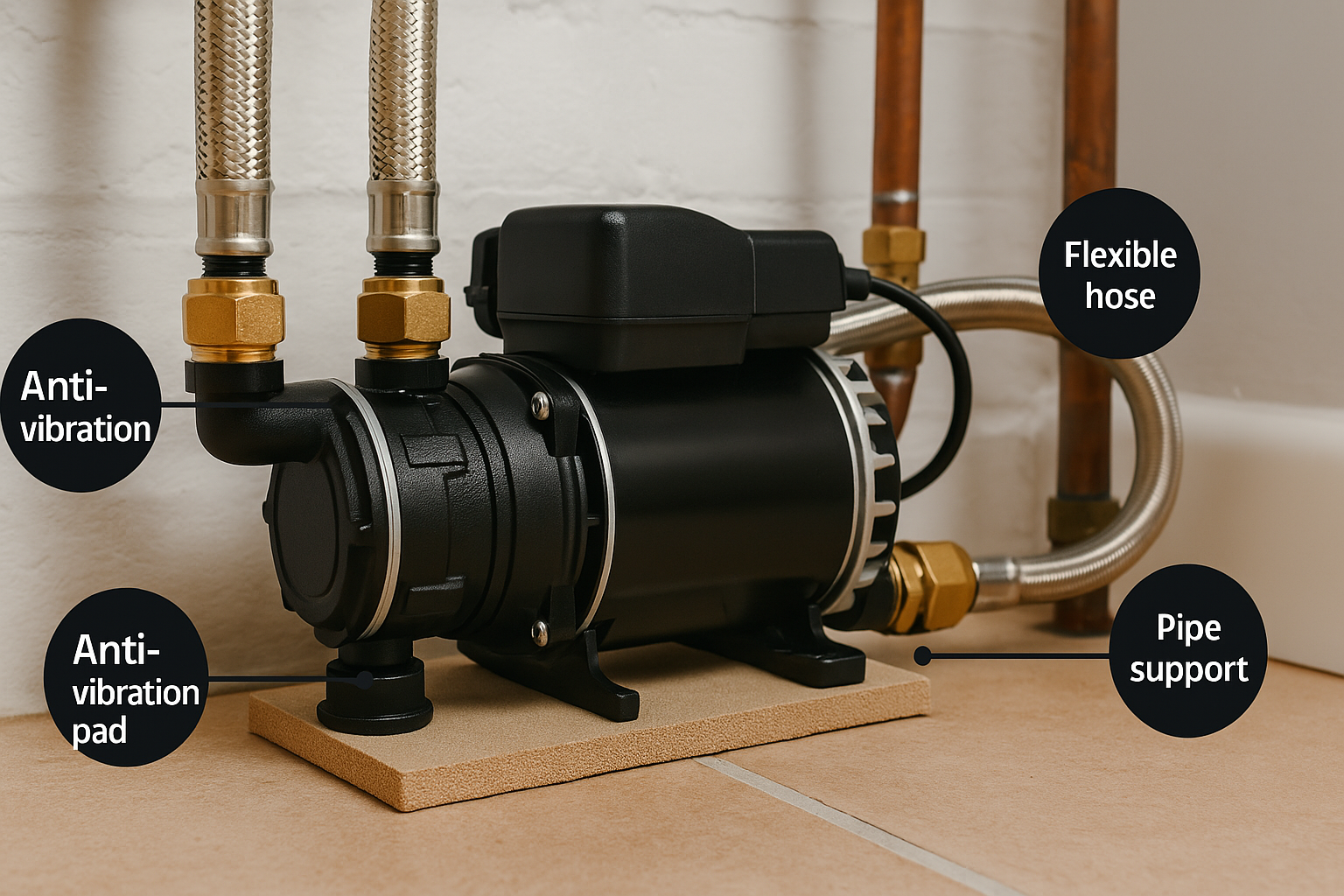
- Poor installation – Rigid pipework, lack of support, or no anti-vibration feet can amplify sound
- Unsupported pipework – Pipes rattling against walls or other surfaces
Make sure flexible hoses are used, pipework is properly clipped, and anti-vibration mounting feet are installed. These simple measures can significantly reduce noise levels.
Shower Pump Buzzing
A constant buzzing or humming sound usually points to the pump being jammed — especially common in hard water areas.
Likely causes include:
- Limescale blocking the impeller
- A broken or worn impeller
- Electrical motor failure
Unfortunately, buzzing often indicates internal damage, and in many cases, the pump will need to be replaced.
How to Make a Shower Pump Quieter
If your pump is working fine but is just a bit noisy for your liking, here are a few ways to tone things down:
- Install anti-vibration mounting pads – These absorb noise from the motor
- Use a sound insulation mat – A cheap and easy way to reduce overall vibration
- Support your pipework properly – Loose inlet or outlet pipes can amplify noise as water flows
Proper positioning, good insulation, and even enclosing the pump in a ventilated, insulated box (if done safely) can make a big difference.
Shower Pump Jammed
If your pump seems to be stuck or isn’t running properly, it could be jammed. Common causes include:
- Limescale buildup inside the impeller chamber
- Seized seals
- A broken impeller that can no longer rotate
In most cases, a jammed pump will need to be replaced — especially if the motor is struggling or overheating. If you're unsure, it's best to call a professional to inspect it.
#4 Leaks & Temperature Problems
Shower pumps are sensitive to both water leaks and temperature changes. Over time, seals can fail, hoses can crack, and exposure to cold can cause serious damage. Here’s how to spot and fix the most common leak- and temperature-related issues.
A Leaking Pump
If you notice water leaking from the pump body, the most common cause is:
- Worn or damaged seals, which deteriorate over time
However, leaks can also be caused by:
- Loose pipe connections
- Cracks in the housing
- Excess pressure buildup
Leaking should never be ignored, as even a small drip can lead to bigger issues or water damage. If you’re confident, you can check seals and tighten connections — but for larger leaks, it’s best to get a plumber involved.
Shower Pump Hose Leak
Leaks from the pump hoses may be caused by:
- Loose fittings
- Worn-out hose material
- Incorrect installation
You can try wrapping PTFE tape or applying PTFE sealant around the leaking joint to create a tighter seal. However, if the hose is cracked or the leak keeps returning, it’s likely time to replace the hose or call in a professional.
Can a Shower Pump Freeze? / A Cold Pump
Yes — just like your pipes, a shower pump can freeze if it's installed in a cold or uninsulated space, such as a loft or garage. Freezing can cause internal damage and stop the pump from working altogether.
To prevent this:
- Insulate the pump using foam lagging or a thermal cover
- Avoid installing it in unheated areas if possible
- Make sure the space is ventilated to prevent overheating
Freezing weather is one of the most common causes of pump failure in winter — and one of the easiest to avoid.
A Cold Pump (Performance Issues)
Even if the pump doesn’t freeze, being too cold can affect performance and slow down the motor. Again, insulation is key. Keeping the pump within a stable temperature range helps it operate efficiently and extends its lifespan.
Shower Pump Smells Like Burning
If your pump is producing a burning smell, stop using it immediately.
Common causes include:
- A blocked filter, causing the motor to overwork
- Debris stuck in the impeller
- Electrical overheating
Clean the filters and rinse the hoses if you suspect a blockage. But due to the fire risk, it’s highly recommended to have an electrician or plumber inspect the motor if the burning smell persists.

#5 Airlocks & Blockages
Airlocks and blockages are among the most common reasons a shower pump underperforms or stops working. Whether it's trapped air in the system or limescale clogging the filters, these issues can usually be resolved with a bit of basic maintenance.
Airlocks
An airlock happens when air becomes trapped in the pump or pipework, preventing water from flowing properly. It’s a frequent issue in gravity-fed systems and can drastically reduce pressure or even stop the pump entirely.
You’ll usually notice:
- No water flow, even though the pump is running
- Intermittent flow, or water that starts and stops
The solution? Bleed the system to release the trapped air — the instructions just below.
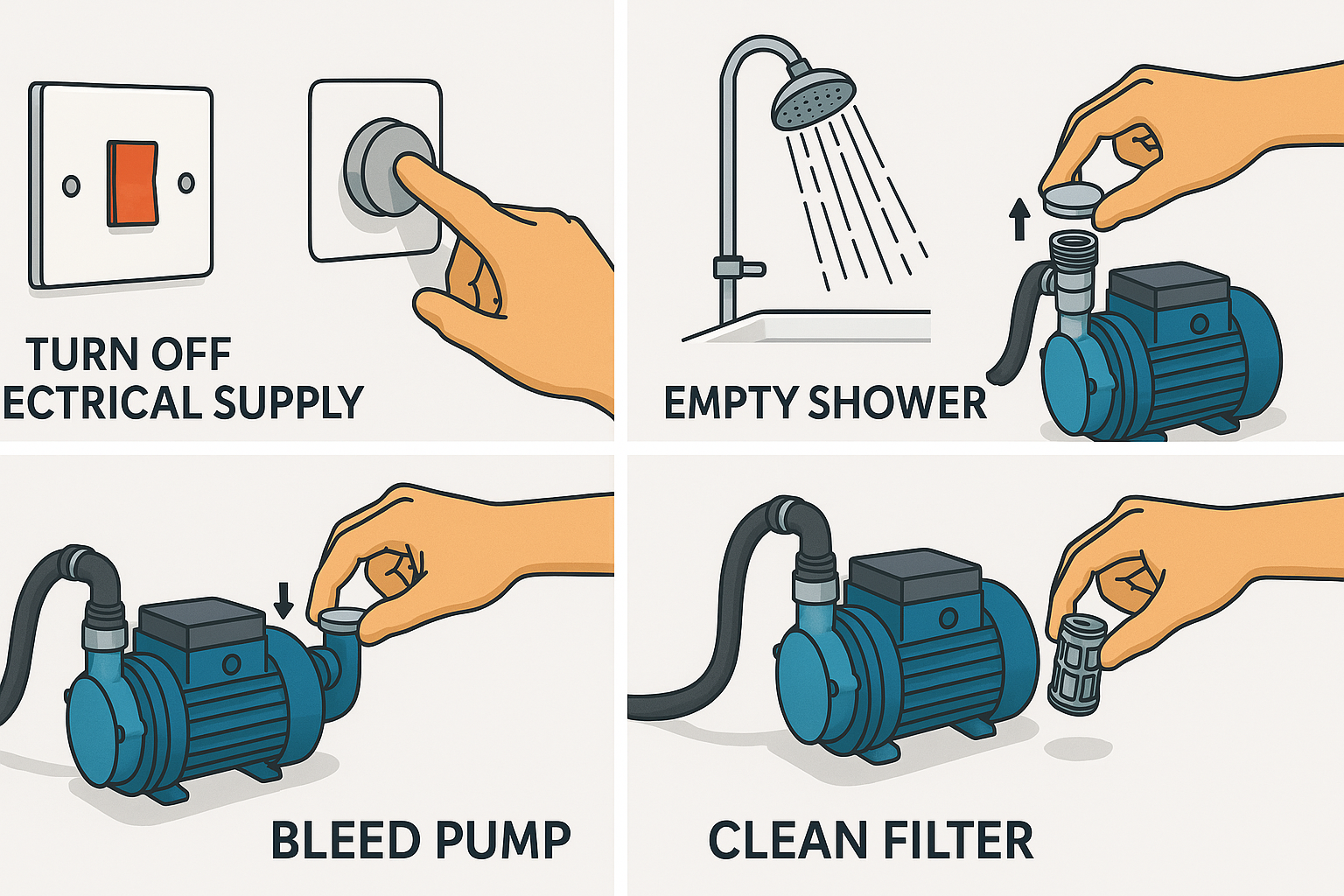
How to Bleed a Shower Pump
Bleeding a shower pump is fairly straightforward:
- Turn off the electrical supply to the pump.
- Turn on the shower to drain any remaining water.
- Switch the shower off once the water stops flowing.
- Remove the connection pipes from the pump to vent any trapped air.
- Once done, reattach everything, restore power, and test.
This should allow water to flow freely again. If airlocks keep happening, you may need to check your plumbing setup or consult a professional.
Blocked Pump Filters
Filters are designed to protect your pump from debris, but they can clog over time — especially in hard water areas where limescale is a problem.
Signs of blocked filters:
- Weak or inconsistent water pressure
- Pump struggling or cutting out
- Buzzing or humming noises from the pump
To clean the filters:
- Turn off the power and service valves.
- Remove the filters (usually found behind the inlet pipes).
- Rinse them thoroughly to remove limescale, grit, and debris.
- Replace the filters and reconnect everything securely.
Regular filter maintenance can prevent more serious damage and keep your pump running smoothly.

Installation, Compatibility & Maintenance
To get the best performance from your shower pump — and to avoid many of the issues covered above — it’s important to choose the right type of pump, install it properly, and carry out simple maintenance now and then.
Can a Shower Pump Be Used with a Combi Boiler?
No — shower pumps cannot be used with combi boilers. Combi boilers rely on mains pressure and don’t use separate hot and cold water tanks, which a shower pump requires. Trying to install a pump on a combi system can lead to serious plumbing issues and damage the boiler.
What Is a Positive Head Shower Pump?
A positive head pump is designed to be gravity-fed. It requires at least one metre of vertical distance (known as “head”) between the bottom of the cold-water storage tank and the pump itself.
Once gravity starts the flow of water, the pump kicks in to boost the pressure to your shower.
What Is a Negative Head Shower Pump?
A negative head pump is made for setups where the pump is at the same level or above the water tank — meaning gravity isn’t enough to start the flow.
These pumps use a pressure sensor to detect water demand and start pumping automatically. They're ideal for properties like bungalows or flats with low water flow or awkward layouts.
What’s the Difference Between Positive and Negative Pumps?
In short:
- Positive head pumps rely on gravity to start water flow.
- Negative head pumps don’t — they activate based on pressure and are better for more complex or compact plumbing systems.
Choosing the wrong type can result in poor performance or a pump that doesn’t activate at all.
Positive vs Negative Head Shower Pumps: Comparison Chart
Feature | Positive Head Pump | Negative Head Pump |
|---|---|---|
Activation Method | Requires gravity to start water flow | Uses a flow/pressure sensor to detect demand |
Minimum Height Requirement | Needs at least 1 metre between tank & pump | No height requirement between tank & pump |
Best For | Traditional gravity-fed systems | Low-pressure or awkward layouts (e.g. bungalows) |
Water Flow at Outlet | Must be present to activate pump | Will activate even if flow is initially low |
Installation Location | Below cold water storage tank | Can be at the same level or above the tank |
Common Use Cases | Houses with good gravity-fed supply | Properties with low head pressure or poor flow |
System Type | Open-vented systems with cold & hot tanks | Same, but where gravity alone isn’t enough |
How to Connect a Shower Pump
Connecting a shower pump can be complex, and unless you're experienced with plumbing and electrics, it’s best left to a professional.
The basic steps include:
- Placing the pump near the hot water cylinder (but never above it for positive head systems)
- Connecting both hot and cold supplies
- Ensuring proper venting and insulation
- Adding anti-vibration feet and flexible hoses to reduce noise and stress on the pump
Incorrect installation can void warranties and lead to system damage, so don’t cut corners here.
Shower Pump Replacement
If your current pump has failed and repairs aren’t cost-effective, replacement may be the best option.
- Expect to pay £350–£400 for a high-quality twin impeller pump
- Installation costs can bring the total to around £500–£700
Always get quotes from qualified installers, and check that your new shower pump matches the head type and system layout of your existing setup.
How Long Should a Shower Pump Last?
Most shower pumps are built to last around 8 years, and many come with a 2–5 year manufacturer’s guarantee. You can sometimes extend the warranty by registering the product after installation.
Lifespan depends heavily on installation quality, water hardness, and regular maintenance.
Maintenance Tips
To keep your pump in top condition:
- Clean the filters every 6–12 months (more often in hard water areas)
- Descale your shower head regularly — it’s often the root cause of weak flow
- Descale your shower head regularly — it’s often the root cause of weak flow
- Inspecting for leaks, strange noises, or signs of wear
- Insulate your pump if it’s installed in a cold space
- Support all pipework properly to reduce stress on fittings
A little maintenance goes a long way in preventing costly repairs or early replacement.
Final FAQs
Here are a few last questions we often hear about shower pump problems — and their quick answers.
Why Does My Shower Pump Pulse?
While it may feel like the issue is with the actual shower pump, it is usually actually caused by a blockage in your plumbing system.
This clog will cause a decline in the overall flow rate, creating a pulsing movement in the pump. It can be really difficult to determine exactly what is causing the issue, but here are some of the most common ones:
- Limescale
- Blocked shower head
- Blocked filters
If it is not caused by any of the above, you should call a plumber to investigate and figure out where the issue is within your plumbing. It is the safest bet for your home and for your pipework.
How to Fit a Power Shower
A power shower combines a thermostatic shower mixer and a built-in pump, and while it's different from installing a standalone shower pump, it also requires careful plumbing and electrical work.
Unless you're confident, we recommend having a qualified plumber or electrician handle the installation to ensure safety and compliance.
Shower Pump Turns On But No Water
If the pump activates but no water comes through, you may have:
- A blockage in the pipework or filters
- An airlock that’s interrupting flow
- An issue with the water supply (e.g., empty tank)
Check filters and bleed the system to remove trapped air — both are quick fixes if that’s the issue.
Conclusion: What You’ve Learned
From buzzing sounds to frozen pipes, we’ve covered all the major problems that can affect your shower pump — and how to fix them. Whether you’re dealing with a one-off issue or looking to prevent future breakdowns, knowing what to look for (and when to call a pro) makes all the difference.
Quick Recap:
- Low pressure? Check filters, shower head, and for airlocks
- No power? Inspect fuses, wiring, and pump position
- Loud or strange noises? Look for jams, install anti-vibration pads
- Leaks or burning smells? Turn off the power and get a professional involved
- Ongoing problems? Maintenance matters — clean filters and descale regularly
With a bit of know-how, most shower pump issues are fixable — and preventable. And if you're ever in doubt, don’t hesitate to call in a professional to keep things running safely and smoothly.